A book in under a minute
Give the book a name and a date and it exists. Everything else — guests, pages, chips — accumulates afterwards, so nothing has to be decided up front.
A wedding guest book you can hear. Family and friends leave a greeting in their own voice, each one becomes a page, and holding a phone to the page plays it back.
The hard part isn't recording audio. It is getting twenty-four people at a wedding to do it without being talked through it, and then making the result something you keep on a shelf rather than in a folder.
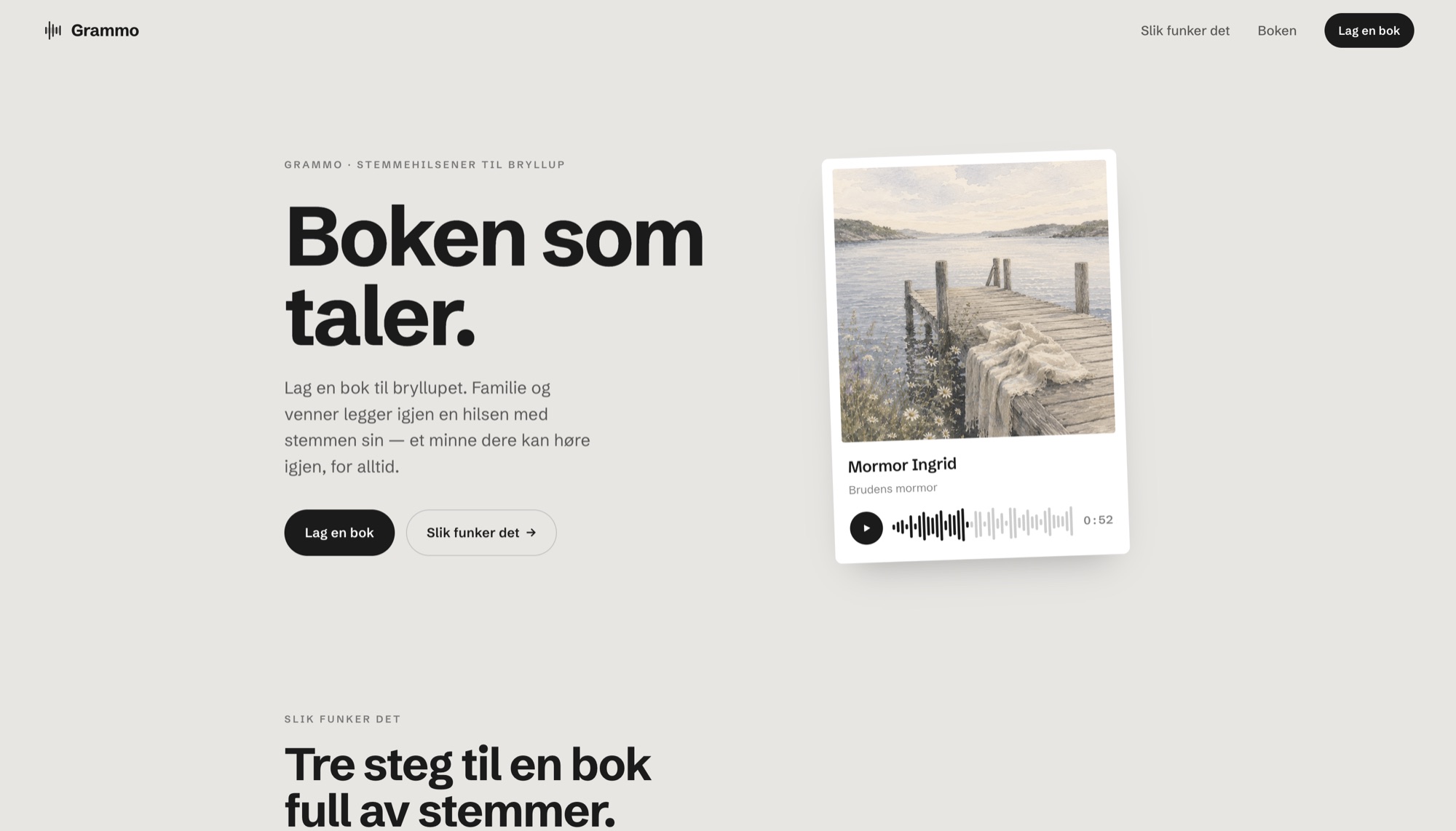
Give the book a name and a date and it exists. Everything else — guests, pages, chips — accumulates afterwards, so nothing has to be decided up front.
Anyone with the link can leave a greeting — grammo.no/ingrid-henrik, no app to install and no account to make, which is the only version that works at a party.
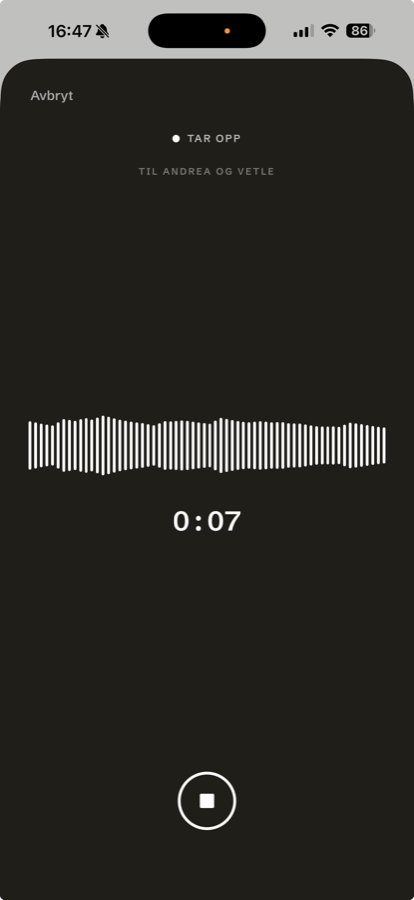
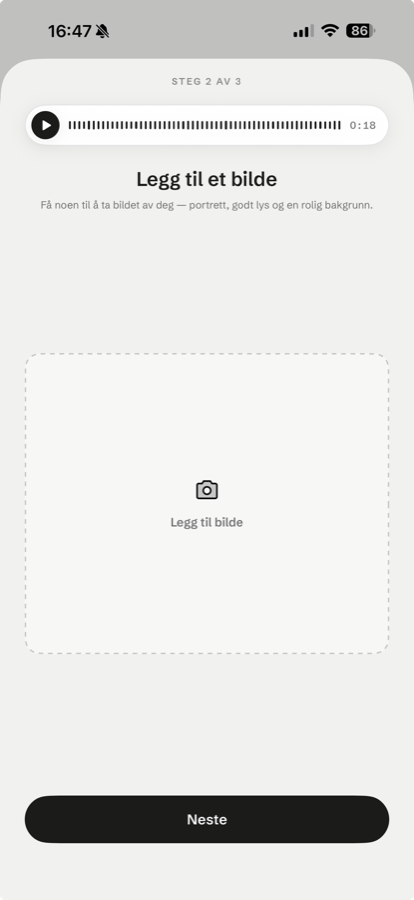
Record, add a photo, add a name and relation. The recorder is a black screen with a waveform, a timer and a stop button, and the photo step tells the guest what a good portrait looks like.
Photo, name, relation and the voice itself. The book shown here holds twenty-four voices for 27 June, and the couple can play any of them from the app before the book is printed.
Each page carries an NFC tag pointing at a short link on lyd.grammo.no. Hold a phone to the page and the greeting plays — no app, no scanning, no menu.
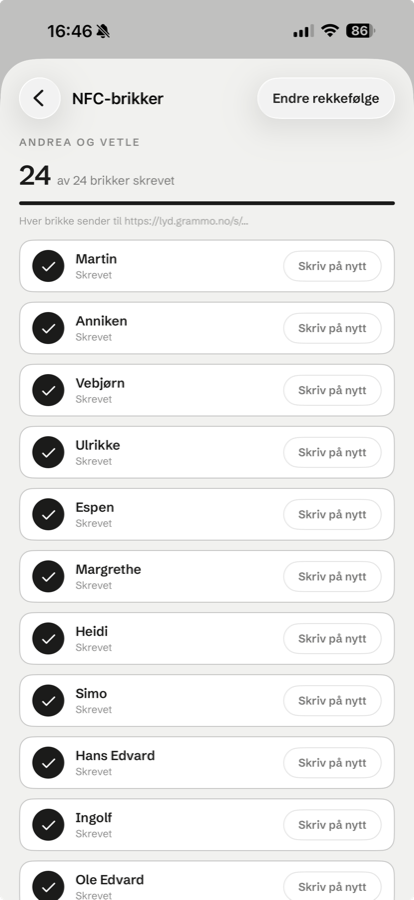
Twenty-four chips, written one at a time, each named after the guest and re-writable if it fails. The unglamorous production step is treated as part of the product rather than a spreadsheet.
No transcription, no filters, no video. The greeting is left as it was said.
A wedding guest book is a solved format that nobody actually reads afterwards. Voices are the opposite: people would keep them, but there has never been a way to hold one. Grammo is that swap and not much more.
Which meant the design work was almost entirely about the guest who has ninety seconds and a drink in one hand. No account, no app, three steps, and a recorder that shows a timer so nobody wonders whether it is working. Everything the couple does can be slower; everything the guest does cannot.
The NFC tag is the part I'd defend hardest and the part that sounds most like a gimmick. It is the difference between an archive and an object — you reach for the book, not for your phone.
You reach for the book, not for your phone.
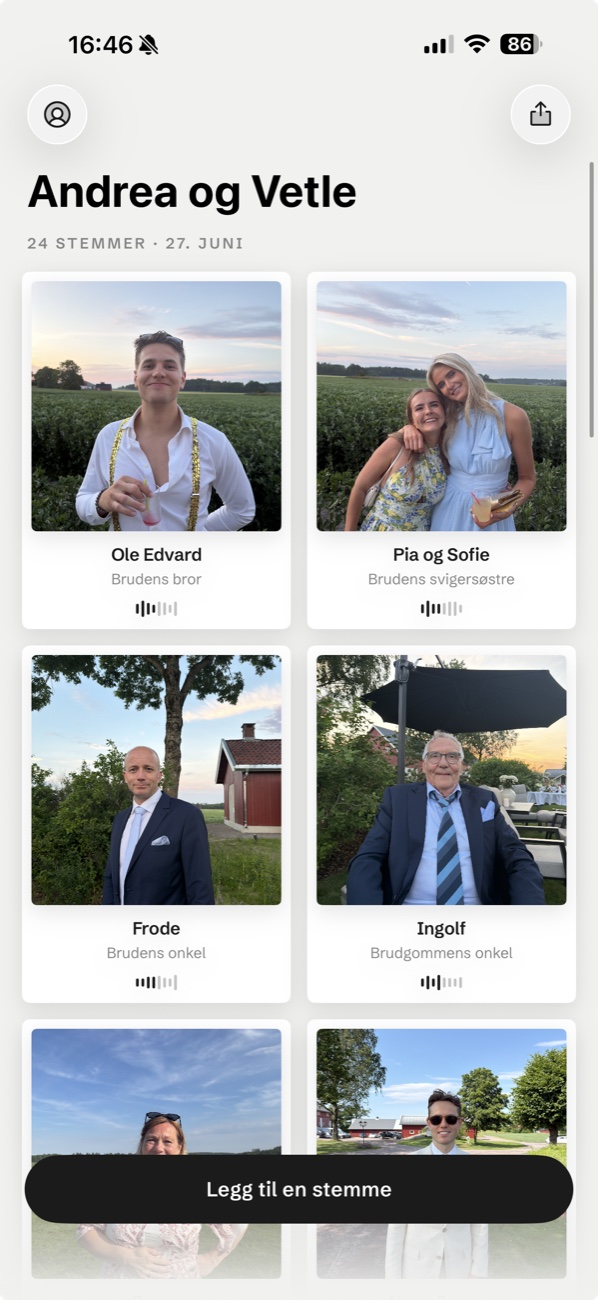
Twenty-four voices and a date, then the guests themselves. The waveform under each portrait is the only interface element on the card — it says the photo can be listened to without saying so in words.
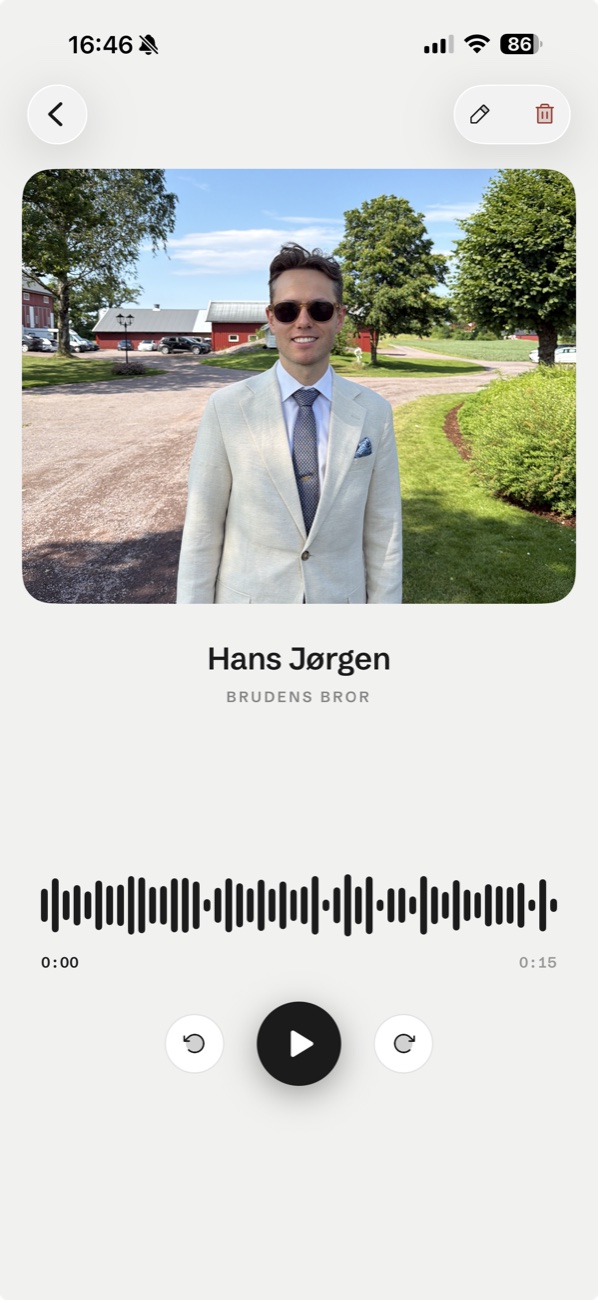
Portrait, name, relation, fifteen seconds. Nothing competes with the face and the voice — the edit and delete controls sit at the top, out of the way of the thing you came for.
The section nobody else writes.
The guest never hears what a good greeting sounds like before recording one. A ten-second example on the first screen would raise the quality of every page in the book, and it is the cheapest change on this list.
Chips are written after the fact, one by one, by whoever assembles the book. That is fine for twenty-four and not fine for two hundred.